Evidence Before Credit: Auditing Climate Change Levy Relief on UK Business Energy Bills

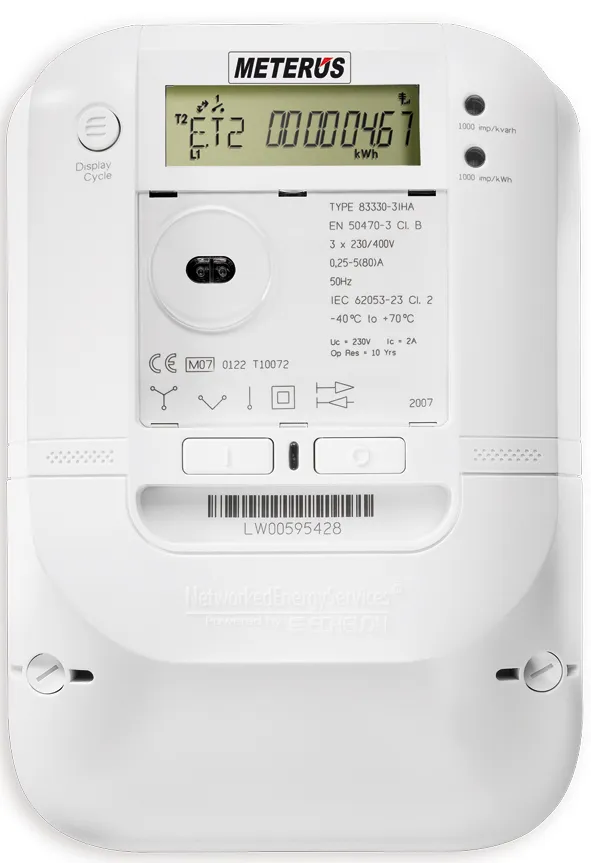
Photo: Ministry of New and Renewable Energy, Government of India, GODL-India, via Wikimedia Commons
Winter bills often arrive with a mix of estimated reads, revised rates and catch-up charges. In the stack of unit rates, standing charges and network costs, the Climate Change Levy line can look small. For a single-site office it may be. For a manufacturer, food processor or distribution portfolio with Climate Change Agreement sites, it is not. CCL is a tax collected by suppliers; it is not a commercial rate to be negotiated. That makes it easy to overlook and hard to recover without evidence.
Why the levy line deserves a second look
Climate Change Levy applies to taxable commodities supplied to business users, including electricity, gas and certain other fuels. HMRC sets the main rates and the reduced rates; suppliers collect the levy through energy invoices. Most organisations should see CCL separately identified and calculated on qualifying consumption. It should not be buried inside a unit rate, and it should not be charged on standing charges, capacity charges or other non-commodity elements.
The complication is relief. Businesses with a Climate Change Agreement can qualify for a reduced rate on eligible sites. Other supplies may be exempt or treated differently depending on use and customer status. The supplier applies the treatment it has been told to apply. If the evidence is missing, late, attached to the wrong meter or never updated after a change of supplier, the default is usually the main rate. That is where quiet overpayments begin.
A sample bill, read carefully
Take an illustrative electricity invoice for a West Midlands food site using 48,200 kWh in a month. The levy line reads: Climate Change Levy, 48,200 kWh at the main rate, £373.55. If that site is covered by a CCA and the supplier has the correct declaration, the expected levy line should be closer to £37.36, reflecting the reduced rate. The gap is roughly £336 for one month. A gas line on the same account can produce a similar pattern: main-rate levy on 120,000 kWh may be around £806, while a reduced-rate calculation may be nearer £282. The exact figures depend on current HMRC rates, so confirm them before challenging a bill. The point is the pattern, not the arithmetic in this example.
Three checks follow quickly. First, does the rate on the invoice match the rate the site is entitled to? Second, is the levy calculated on actual or estimated consumption, and has a later actual read produced the correct credit? Third, does the MPAN or MPRN on the invoice match the site schedule in the CCA evidence? A correct rate applied to the wrong meter is still a wrong bill.
Where relief goes missing
Supplier misapplications rarely look dramatic. They usually come from administrative drift.
- A new site or meter was added after the CCA schedule was last shared with the supplier.
- The supplier holds an old relief declaration, or the declaration names a different legal entity.
- A change of supplier or contract novation reset the account to the main rate.
- A multi-site portfolio has relief applied to some meters but not others.
- Estimated reads carry main-rate levy until an actual read arrives, and the credit is never checked.
- The levy is calculated on a total charge rather than on qualifying kWh.
- A tenant recharge or landlord supply passes through the wrong levy treatment.
None of these necessarily indicates bad faith. They do indicate that CCL should be audited as a data and evidence process, not simply accepted as a tax line.
The evidence pack suppliers actually need
A challenge is only as good as the pack behind it. For a CCA claim, assemble the umbrella agreement, the underlying agreement for the site, the current site schedule and the CCA registration details. Add a supplier relief declaration that clearly links the legal entity, site and MPAN or MPRN. Keep a meter map so that every invoice line can be traced to a qualifying site. For other reliefs or exemptions, use the equivalent evidence the supplier requires; the names differ, but the principle is the same.
Keep the pack current. A certificate or schedule that was correct two years ago may not support a claim for the current billing period. Store invoices, estimated read history and correspondence in the same file. If a supplier asks for evidence, respond with a single indexed pack rather than a scatter of attachments. That shortens the query and reduces the chance of a partial correction.
A correction process that protects the renewal
Start with a reconciliation. Pull twelve to twenty-four months of invoices and compare the levy charged with the levy that should have applied. Flag every line where the rate, meter or calculation basis looks wrong. Calculate the expected credit by month and by site, and separate estimated-read timing differences from genuine rate errors.
Then raise a formal billing query. State the account, invoice numbers, meters, the relief relied on and the calculation. Ask for a credit note and for corrected future billing. Keep the query separate from the renewal negotiation. Suppliers can become defensive when a correction request arrives alongside a tender, and a renewal quote should not be treated as a settlement for old billing errors. Pay the undisputed portion of the invoice while the query is open, and ask for written confirmation of the correction timeline.
Finally, fix the cause. Update the supplier's relief records, add the correction to the renewal handover and check the first two invoices after any change of supplier or meter. A credit note resolves the past; a controlled relief register protects the future.
What to fix before the winter rebill
Before the next rebill lands, confirm that every CCA site is linked to the correct meter and legal entity. Check that the supplier has the current declaration and site schedule. Review the last three invoices for levy rate, calculation basis and estimated reads. Where a correction is due, submit it with a complete evidence pack and a clear credit calculation. Then diary the follow-up. The levy line is small enough to miss and large enough to matter.