Beyond the Boiler Room: Budgeting for Electrified Heat in 2026/27
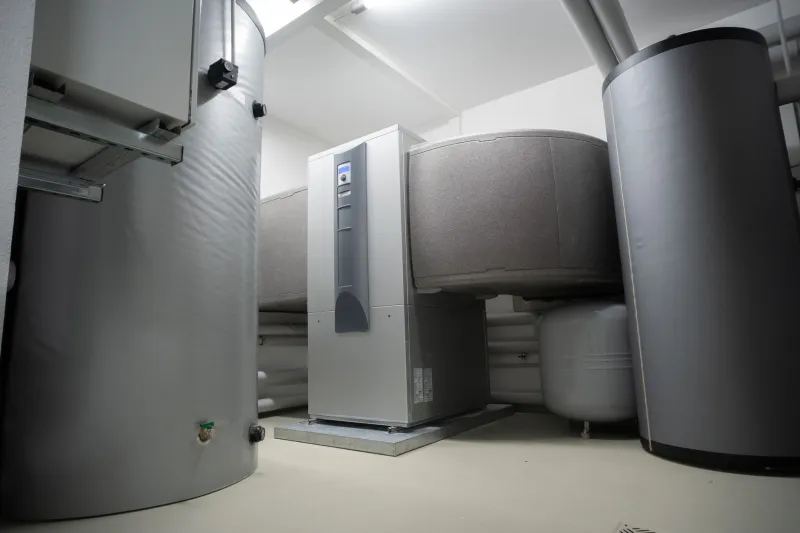
For many UK organisations, the heat pump decision begins and ends with a capital quote and a simple payback figure. That is understandable, but it is not a budget. A heat pump changes the fuel a site buys, the shape of its electrical load and, in some cases, the capacity it must reserve on the network. In 2026/27, those effects matter as much as the installed cost.
The practical task is to model electrified heating as an annual operating cost alongside capex, grant funding and site capacity. The aim is not to declare heat pumps universally cheaper or dearer. It is to identify the assumptions that determine whether a project improves or worsens the organisation’s energy budget.
Start with heat demand, not the heat pump
A credible model starts with the site’s annual heat demand in kWh, its peak heating load in kW, hot-water demand and operating hours. For many organisations, half-hourly metering and gas billing data will provide a reasonable base. Where data are thin, a short monitoring period is usually cheaper than correcting an oversized design later.
Electrification also changes when energy is consumed. A gas boiler’s output is controlled at the point of use. A heat pump’s electrical demand is weather-dependent and can coincide with the site’s existing winter peak. That coincidence is central to demand charges, agreed capacity and electrical infrastructure.
Capex and grant funding: the capital stack
The installed cost of a heat pump project is rarely just the heat pump. It may include emitters, pipework, hot-water storage, controls, electrical upgrades, plant-room works, commissioning and enabling works. For some sites, the electrical connection or switchgear becomes the largest single line.
Grant funding can reduce the capital burden, but it is scheme-specific and usually capital-only. Public bodies may look to decarbonisation funding programmes; industrial sites may have access to industrial decarbonisation support where eligible; heat network projects have separate funding routes. Eligibility, subsidy control and timing all need checking before a grant is treated as certain.
A grant does not reduce the annual electricity bill. It may improve the project’s cash profile, but the operating budget should still be modelled on the full heat load and the expected seasonal performance.
Seasonal performance and the shape of the load
The headline coefficient of performance is a laboratory figure. Budgets should use a seasonal performance factor that reflects UK weather, flow temperatures, emitter design, controls and hot-water setpoints. A well-designed low-temperature system will usually perform better than a retrofit that keeps high flow temperatures because radiators were not resized.
Cold spells matter twice. They reduce heat pump efficiency and increase the electrical peak. A hybrid arrangement can manage that peak, but it also keeps a gas connection and may complicate the carbon and compliance case. The budget should show how the site will operate on the coldest days, not only across an annual average.
The gas-to-electric price spread and the Climate Change Levy
Electricity is usually more expensive per kWh than gas. The heat pump must therefore deliver more heat per unit of electricity than the boiler delivers per unit of gas. If gas costs 6.5p/kWh and electricity 24p/kWh, the price ratio is about 3.7. A heat pump with a seasonal performance of 3.0 will not beat that gas price on fuel alone; one with a seasonal performance of 3.8 may.
The non-domestic Climate Change Levy (CCL) adds another layer. CCL applies to both gas and electricity for most non-domestic consumers, at rates that differ by fuel. Some organisations receive relief or exemption, so the treatment must be checked against the site’s actual classification and supply arrangements. CCL is not the only levy or fixed cost, but it can alter the fuel-cost comparison enough to change a marginal decision.
The correct comparison is the fully delivered cost per kWh of useful heat: commodity, CCL, network charges, standing charges and any capacity-related charges. A unit rate alone is not a budget.
Demand charges and site capacity: the hidden budget line
For half-hourly sites, electrified heating can affect agreed capacity and network charges. A heat pump that adds 200 kW to the winter peak may require a larger connection, upgraded switchgear or a revised capacity reservation. Those costs can appear as capital expenditure, fixed annual charges or both.
Even where no connection upgrade is needed, the load shape can affect the value of an electricity contract. A supplier pricing a renewal will want to understand the new winter profile. If the heat pump is commissioned mid-contract, the organisation may also need to revisit capacity assumptions before the next renewal.
A simple 2026/27 budget model
A defensible model can be built in a spreadsheet. For each heating option, calculate annual fuel input from heat demand divided by seasonal efficiency, then multiply by the delivered fuel price. Add CCL, standing charges, capacity charges and maintenance. Repeat under at least two tariff scenarios: a central case and a case with a wider electricity-to-gas spread.
As an illustrative example, take a site with 1,000,000 kWh of annual heat demand. A gas boiler at 90% efficiency uses about 1,111,000 kWh of gas. At 6.5p/kWh, fuel cost is about £72,200 before CCL and fixed charges. A heat pump at a seasonal performance of 3.0 uses about 333,000 kWh of electricity. At 24p/kWh, fuel cost is about £80,000. At 22p/kWh it falls to about £73,300. The example is not a forecast; it shows how quickly a headline case moves with efficiency and price assumptions.
The budget should also show the peak electrical increase and any capacity charge. For some sites, that line will be more decisive than the fuel comparison.
What to ask before committing
First, ask for the heat demand and peak load assumptions in writing. Second, ask how seasonal performance was derived and whether high flow temperatures have been designed out. Third, ask whether the electrical capacity and connection costs are included. Fourth, ask how CCL and fixed charges have been treated. Finally, ask how the annual cost changes under a higher electricity price or a narrower gas-to-electric spread.
Electrifying heating is a capital decision, but it is also a long-term energy procurement decision. The organisations that manage it well will treat the heat pump as a new load shape to be priced, metered and reviewed—not simply as a boiler replacement with a grant attached.