The Landlord’s Kilowatt-Hour: Auditing Energy Recharges Before Reconciliation

For many UK businesses, the energy contract is not signed with an electricity supplier at all. The landlord or managing agent holds the supply, and the tenant pays through a service charge, a sub-meter, a private network or a simple fixed recharge. The arrangement can be perfectly legitimate. It can also be one of the least transparent costs on the property budget.
That matters more as 2026 budgets are tightened. A competitive unit rate at the landlord’s level does not guarantee a competitive recharge at the tenant’s level. Losses, standing charges, administration fees, estimated readings and allocation methods can all widen the gap between what the supplier bills and what the occupier pays. The task is not to assume the worst; it is to make the recharge auditable.
Start with the lease, not the invoice
Before testing arithmetic, establish what the lease actually permits. Is energy included within the rent, recovered through the service charge, billed via a sub-meter, or supplied through a private network? Each model creates different rights and different evidence requirements.
Ask for the clause that authorises the recharge, the clause that governs service-charge administration, and any schedule dealing with metering. Check whether the landlord may recover energy at cost, whether a management or administration fee is permitted, and how common-area consumption is to be allocated. If the lease is silent on a charge, that is a question to raise rather than an invitation to accept the status quo.
Draw a recharge map
A useful audit begins with a simple map from supplier invoice to tenant invoice. Request the landlord’s supplier bills for the relevant period, the sub-meter readings, the recharge calculation and the service-charge apportionment. Then build a schedule with one line per meter and one column for each charge component: unit rate, standing charge, capacity charge, loss factor, administration fee, meter rental and any other item.
The map should show the total cost incurred by the landlord and the total cost recharged to occupiers. An unexplained gap is not proof of error, but it is a prompt for explanation. Common parts, vacant units, landlord-occupied areas and unlet floors should be visible in the allocation. If they are not, the tenant may be carrying costs that belong elsewhere.
Test the arithmetic and the assumptions
Start with the unit rate. It should be traceable to the supplier invoice, subject only to adjustments expressly permitted by the lease or the metering arrangement. Where a private network involves distribution losses, the loss factor should be stated and capable of explanation. A blanket percentage applied without evidence deserves scrutiny.
Then examine the fixed elements. Standing charges and capacity charges are easy to overlook because they do not move with consumption. Administration fees should be separately identified and consistent with the lease. A per-meter fee, a percentage of energy cost and a general management fee can all be legitimate in isolation; the risk is double recovery or a fee that grows faster than the underlying service.
Estimated readings also merit attention. A recharge based on estimates may later be corrected, but the tenant should know the basis and the timetable for true-up. If the reconciliation arrives months after the period, ask how estimated consumption was calculated and whether subsequent actual readings have been applied.
Verify the meter, not just the bill
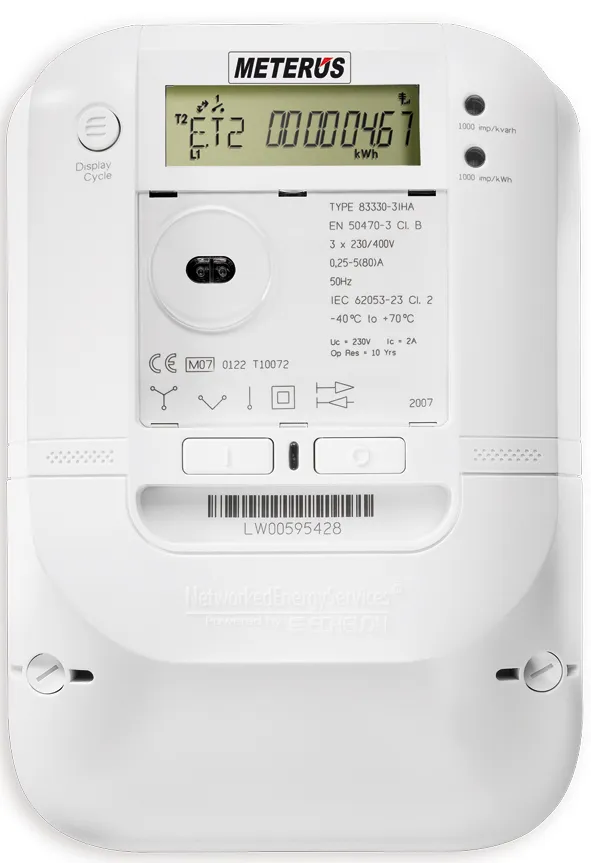
Sub-meters can drift, fail or be replaced without the occupier noticing. Check the meter serial number against the schedule, confirm the reading dates and test whether the readings are actual or estimated. For larger supplies, compare the sub-meter total with half-hourly data where available. Look for obvious anomalies: a meter that never moves, a reading that falls without explanation, or a multiplier that has been applied incorrectly.
Where the meter is used for billing, ask whether it is of an approved type and when it was last checked. If accuracy is in doubt, exercise any check-meter right in the lease or request a landlord-arranged test. Keep a photographic record of readings and meter details. Small discrepancies repeated across several meters over a year can become a material cost.
Use information and check-meter rights
Service-charge transparency depends on evidence. Most commercial leases give tenants some right to inspect accounts and supporting documents, although the wording varies. The landlord may be entitled to recover only reasonable costs, and the tenant may be entitled to see how those costs were built up.
Check-meter rights are equally practical. A tenant may be allowed to install its own meter to verify consumption, subject to landlord approval and reasonable conditions. Even where no express right exists, a written request for a joint reading or an independent test can move the conversation forward. Put the request in writing, specify the meters and periods concerned, and set a reasonable deadline for a response.
Challenge before the reconciliation
The best time to challenge a recharge is before the service-charge reconciliation is finalised, not after the balance has been demanded. A pre-reconciliation audit gives the landlord time to correct readings, reallocate costs or explain a fee without disrupting the year-end process.
Set out the points precisely. Identify the meter, the period, the amount disputed and the evidence required. Ask for a corrected statement or a credit where errors are accepted. If the lease contains a dispute procedure, follow it. Keep the correspondence factual and retain the supporting documents; a well-evidenced query is harder to dismiss than a general complaint about high bills.
Make the next lease clearer
Recharge problems often recur because the lease does not specify the method. At renewal or break, consider adding requirements for actual readings, a stated loss factor, a cap or fixed basis for administration fees, and a right to receive supplier invoices on request. A clear metering schedule is not a bureaucratic extra; it is a cost-control mechanism.
For 2026 and beyond, the principle is straightforward. A landlord-held supply should be auditable from supplier invoice to tenant charge. Where that chain is visible, tenants can budget with confidence. Where it is not, the reconciliation is the moment to ask the questions that turn an opaque recharge into a defensible cost.