What Was Never Consumed Still Counts: The Case for a Negawatt Line in Board Reporting

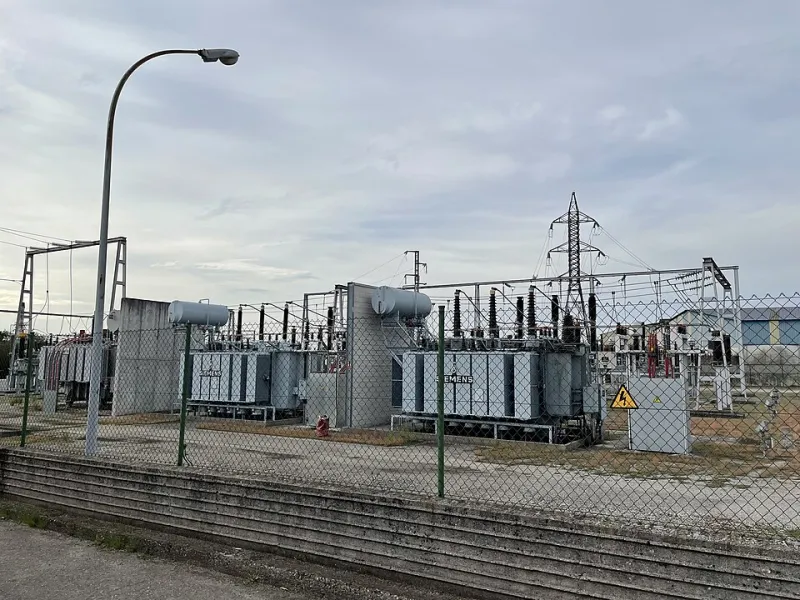
Photo: Colin Smith, CC BY-SA 2.0, via Wikimedia Commons
Ask a UK finance director how the organisation manages energy cost and the answer will almost certainly describe buying: when the contract renews, who brokers it, whether the price is fixed or flexible. Ask what the organisation did last year to need less of it, and the answer becomes a list of projects — a lighting scheme here, a controls upgrade there — without a number attached.
That asymmetry is not irrational, but it is expensive. Procurement produces a document with a rate on it. Demand reduction produces a counterfactual, and counterfactuals are easier to doubt. The result is that the visible activity crowds out the more valuable one.
Procurement has won the argument by default
Consider the arithmetic on a mid-sized multi-site estate consuming 12 GWh of electricity a year, with a delivered cost of roughly 21.7p per kilowatt-hour and an annual bill in the region of £2.6 million. A hard-won procurement result — half a penny off the unit rate across the whole volume — is worth about £60,000. It is a good outcome, and it will be reported prominently because it has a signature and a contract behind it.
Now suppose the same estate removes 6 per cent of its consumption through scheduling changes, setpoint discipline and the retirement of obsolete equipment. That is 720,000 kWh, worth roughly £156,000 at the same delivered rate, before any allowance for avoided Climate Change Levy, avoided capacity charges where peaks fall, and reduced exposure to non-commodity cost. It is two and a half times the procurement win, and it will appear nowhere, because nothing arrived to prove it.
The negawatt — a term Amory Lovins coined in the 1980s and which the industry has never quite absorbed — remains the only energy product with no invoice, no meter register and no supplier to complain to.
Why the demand side stays an afterthought
Three structural reasons, none of them about engineering.
Ownership is diffuse. Procurement sits with a named individual who has a calendar. Consumption sits with operations, estates and finance collectively, which is to say with nobody in particular.
The baseline is contestable. A rate is a fact; a weather-normalised counterfactual is an argument. Any saving built on a model invites challenge from someone who prefers a simpler story.
Reporting obligations favour the wrong side. Streamlined energy and carbon reporting and the Energy Savings Opportunity Scheme both capture what was consumed and what was recommended. Neither produces a routine, auditable record of what was avoided, so the board pack reflects spend and volume and nothing else.
A short discipline for counting what never happened
Measurement does not need to be elaborate, but it does need to be fixed before the project starts, not assembled afterwards.
- Set the baseline first. Twelve months of half-hourly data, adjusted for weather and for production or occupancy volume. Freeze it in writing and have operations agree it before work begins.
- Define the boundary. State plainly which meters, which systems and which period are in scope. Any change in scope later resets the baseline.
- Choose a method and keep it. An adjusted-baseline comparison at the meter level is sufficient for most estates and avoids the cost of a full measurement and verification exercise. Where savings are contested or large, an independent review is worth commissioning.
- Separate price from volume. A lower bill caused by a cheaper rate is not a negawatt. Report the two effects independently, always.
- Test persistence at twelve months. Efficiency savings decay when setpoints drift and schedules are overridden. A single measurement after commissioning proves commissioning, not savings.
What the board pack should show
One additional line, in the same table as volume, rate and cost:
Negawatts delivered: kilowatt-hours avoided, valued at the delivered cost avoided, less the cost of delivery, with the measurement method and the review date noted alongside.
That line changes behaviour in a way that a sustainability narrative does not. It gives operations a number they own. It forces efficiency proposals to be judged on the same basis as procurement offers, which is fairer to both. It also exposes the uncomfortable cases — the projects that cost more per avoided kilowatt-hour than the energy they displaced — and a strategy that cannot survive that exposure was not a strategy.
The harder argument
There is a case, made honestly, that procurement deserves its prominence: it is fast, it is certain, and in a volatile market it protects the business from shocks that efficiency work cannot address. Nothing here disputes that. A well-run energy function buys well.
But a business that buys well and consumes carelessly is optimising the smaller half of the equation. The cheapest kilowatt-hour remains the one that is never bought, and until it appears on a page beside the rate, it will keep losing to the deal that does.