Capacity You Inherited, Cost You Keep: Rethinking Agreed Supply Capacity at Renewal
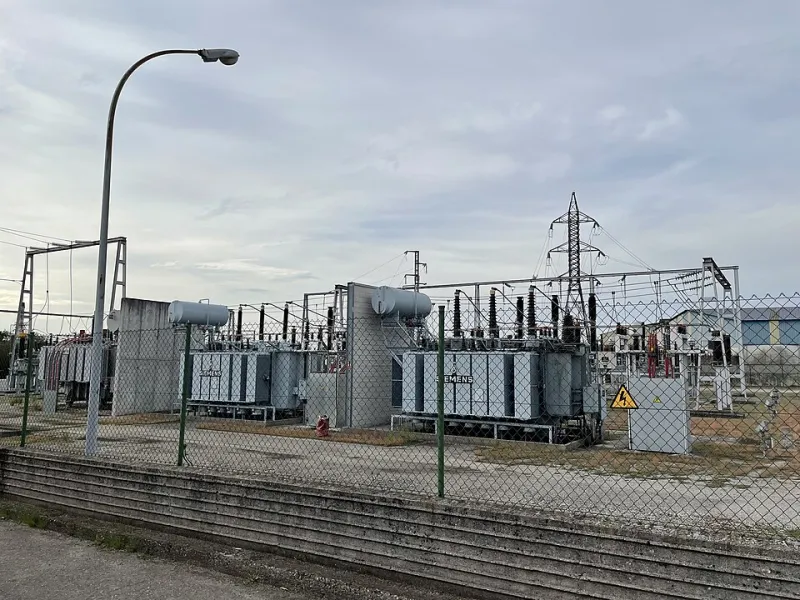
Photo: Tfeliz, CC BY-SA 3.0, via Wikimedia Commons
The standing charge is the least examined number on a business energy bill. It is small beside the unit rate, it moves little from month to month, and it rarely prompts a question at board level. Yet buried inside it sits a figure that, on a great many UK sites, was never chosen by the organisation now paying for it.
That figure is agreed supply capacity (ASC). It is charged whether or not the site uses it, and it outlives changes of tenant, changes of process and changes of supplier. For an estate entering the 2026/27 budget round, it is one of the few remaining line items where a decision taken years ago by somebody else can be re-taken on evidence.
A charge for availability, not consumption
Distribution use of system (DUoS) charges contain an availability component, levied on the agreed capacity at each supply point and expressed in pence per kVA per day. Suppliers recover it through the standing charge, usually as a single blended figure that also absorbs meter operation and data collection. Because it arrives as one number, the capacity element is effectively invisible to the person reviewing the bill.
It is also expressed in kilovolt-amperes rather than kilowatts. A site with a poor power factor draws more kVA than kW for the same output, and therefore needs more capacity to serve identical work. That detail matters twice over: once for the size of the charge, and again for the scope of any correction.
Where the number came from
Three origins account for most over-procurement.
Inheritance. A unit changes hands and the capacity transfers with the supply. The incoming occupier inherits a figure sized for a warehouse that once ran chilled storage, or a press shop that has since been stripped out.
Caution at a previous renewal. Somebody added headroom against a plant upgrade that was discussed and never commissioned. Capacity increases are easy to request and almost never revisited.
Blended brokerage. Where a portfolio is re-tendered as a block, individual site capacities are rarely re-examined. The renewal proceeds on the assumption that last year's figures were right, and each year the assumption compounds.
Reading maximum demand against contracted capacity
Two data sources settle the question. The first is the ASC for every MPAN, available on a recent bill or through the supplier portal. The second is twelve months of half-hourly consumption, converted from kWh to kVA.
Rank the half-hours rather than looking only at the annual peak. The top twenty intervals tell you what the site genuinely needs; the intervening months tell you how often it needs it. Then strip out one-off events before drawing conclusions: a commissioning week, a cold snap, a temporary chiller hired during a failure. Those are precisely the occasions when a capacity buffer earns its keep, and removing them without thought is how under-procurement happens.
A useful diagnostic is utilisation: maximum demand as a share of ASC. A site that has not exceeded 65 per cent of its contracted capacity in twelve months is funding headroom that no operational requirement has claimed.
What the headroom costs
Take a distribution warehouse with 500 kVA of agreed capacity and a twelve-month maximum demand of 320 kVA. At an illustrative availability charge of 6p per kVA per day, the site pays £10,950 a year for capacity. The demand it actually places would cost £7,008. The difference, £3,942, buys nothing. Across eighteen such sites the figure approaches £70,000 a year — not transformative on its own, but unarguable once identified, and it recurs.
The risk on the other side
Capacity is not a number to minimise. Where a site exceeds its ASC in a billing period, the excess capacity charge applies, typically at a multiple of the availability rate — three times is a common benchmark, though it varies by network operator. Because the premium is charged on the excess for the whole period, a single cold month or a badly timed shift change can cost more than a year of modest headroom.
The objective is alignment, not parsimony: enough capacity to cover the top intervals with a defensible margin, and no more.
Timing the adjustment
Capacity changes are instructed through the supplier, which notifies the network operator. In practice, a reduction usually takes effect from a future billing period boundary and can often be arranged within one to two months, subject to the variation terms in the contract. Some agreements limit how many adjustments may be made in a contract year; some require notice in writing; a few require evidence that demand has sustained at the lower level. Increases may trigger a network assessment, which adds weeks.
For organisations on an April financial year, the arithmetic is unforgiving. Instruct a change in December and it can take effect early in the new calendar year, landing several months of saving inside 2026/27. Leave the instruction until the renewal is signed in March and the saving defaults into 2027/28, while the current year closes with the cost intact. Read the variation clause before deciding the deadline; do not assume the renewal date is the only date that matters.
A short audit sequence
- Extract agreed capacity for every MPAN from a current bill or portal export.
- Pull twelve months of half-hourly data and convert to kVA.
- Rank intervals, isolate one-off events, and record the sustained peak.
- Calculate the annual cost of unused headroom at the applicable availability rate.
- Model the downside: cost of a realistic exceedance at the excess rate.
- Check the contract for variation limits, notice requirements and effective dates.
- Instruct in writing, and verify the change on the first bill after it takes effect.
That last step is not a formality. Capacity amendments are periodically instructed and never applied, and a saving that appears on paper but not on the invoice is not a saving at all. Reconciling the standing charge against the intended capacity figure is the only proof that the decision reached the meter.