Ghost Connections: Closing the Gap on Unregistered Supply Points Across a UK Estate
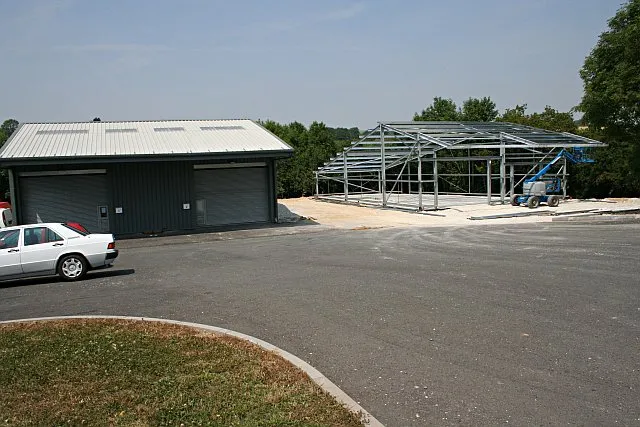
Photo: Tony Atkin, CC BY-SA 2.0, via Wikimedia Commons
The supply point that is not on the list
Most multi-site organisations believe they know how many energy supply points they hold. The central register lists the sites, the accounts team holds the invoices, and the renewal timetable is built around them. Yet estate portfolios have a habit of accumulating connections that never made it onto that list: a temporary supply left live after a construction project, a common-parts meter absorbed into a service charge, an orphaned MPAN following a tenant vacation, or a sub-meter installed for a plant item and then forgotten.
These are not necessarily signs of misconduct. They are usually administrative artefacts. But they can still consume budget, distort consumption benchmarks and complicate a renewal. In a 2026/27 planning cycle, where every line of spend is being tested, an unregistered supply point is a cost-management issue before it is a compliance one.
Why the problem surfaces at renewal and reconciliation
Unregistered supplies rarely announce themselves. They tend to emerge at three points: when a supplier queries aggregate consumption against a site list; when a landlord or managing agent reconciles service-charge energy; or when a site is sold, closed or handed back. A fourth trigger is increasingly common: internal reporting. As organisations tighten their energy data for budgeting and carbon reporting, a meter that cannot be matched to a site code becomes a visible exception.
The risk is not confined to the unit rate. An orphaned supply can attract standing charges, capacity charges, deemed-rate terms or out-of-contract rates. It can also generate estimated bills that are difficult to challenge once several quarters have passed. The longer the connection remains outside the register, the harder it becomes to establish who should have been paying and on what basis.
Step one: build a supply-point census
The starting point is a census, not a hunt. Bring together every identifier the organisation holds: MPANs for electricity, MPRNs for gas, meter serial numbers, site names, postal addresses, site codes and contract references. Add the supplier name, account number and current contract end date where available.
Then compare that list with the finance ledger. Look for energy payments that cannot be matched to a known account, and for accounts that are paid but absent from the estate register. The objective is not to resolve every discrepancy immediately, but to create a single working list of known, suspected and unmatched supply points. That list becomes the audit trail.
Step two: trace responsibility through the lease
A meter is only unregistered from the organisation's perspective. Legally, someone is responsible. The lease or transfer document should define the demised area, the common parts, the service-charge obligations and any requirement to maintain or transfer supplies.
For each suspect supply, ask three questions. Is it within a demised area occupied by the organisation? Is it a common-part or landlord supply recovered through a service charge? Or is it a legacy connection that should have been transferred or disconnected at the end of a previous occupancy? The answer determines whether the organisation should adopt the supply, recover the cost, or close it.
This is where site plans matter. A meter room drawing, an estate plan and a schedule of areas can resolve in minutes what an invoice query cannot resolve in weeks. Where plans are missing, a site visit is usually more efficient than further desk research.
Step three: verify in the field
A field audit should confirm what the paperwork suggests. Walk the meter rooms, plant areas and external compounds. Record meter serial numbers, MPANs, isolator positions, sub-meter labels and the loads they serve. Pay particular attention to common loads that are easy to overlook: car-park lighting, security systems, pumps, telecoms equipment, temporary builders' supplies and irrigation or frost-protection circuits.
Photograph the meter and its surroundings, and note the site code and access arrangement. If a meter is labelled but not on the register, or on the register but not physically present, record that too. The purpose is evidence, not speculation. A clear photographic record and a signed site note will support any later challenge or transfer request.
Step four: reconcile against invoices and data
Once the physical and contractual picture is clearer, reconcile the suspect supplies against invoices and, where available, half-hourly or consumption data. Look for consumption patterns that match the site's operating hours, or for a baseline load that persists when the site is closed. A supply that continues to consume power after a site has been mothballed is a priority case.
This stage also helps quantify the exposure. Standing charges, out-of-contract rates and estimated billing can be separated from genuine consumption. That distinction matters when deciding whether to recover costs, negotiate a settlement or simply close the account.
Step five: adopt, transfer or disconnect
There are usually three outcomes. The organisation may adopt the supply into its portfolio and add it to the contract and register. Responsibility may sit with a landlord or tenant, in which case the account should be transferred or recharged under the lease. Or the supply may no longer be needed, in which case disconnection or isolation should be arranged through the supplier and, where necessary, the network operator.
Each route has administrative lead times. Do not assume a supply can be closed instantly, and do not leave a live connection without an owner while the paperwork is resolved. A named interim responsibility is better than an unmanaged gap.
Step six: make the register a control, not a snapshot
The final step is governance. Add a change-control requirement for new supplies, temporary connections and site disposals. Require a meter serial and MPAN or MPRN before an account is added to the register. Include supply-point checks in lease events, site closures and construction handovers. Review the register annually against invoices and site plans.
An unregistered supply point is rarely a single dramatic failure. It is a small administrative gap that persists because no one owns it. For a cost-conscious estate, the remedy is a repeatable audit sequence: census, lease trace, field verification, reconciliation and closure. That sequence turns a phantom connection into a known line item, and a known line item into a decision.